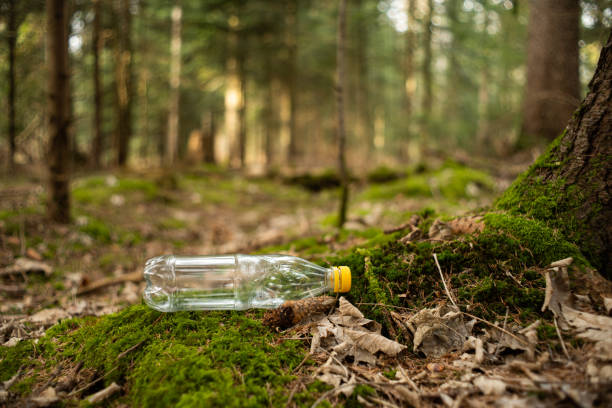
What are plastics?
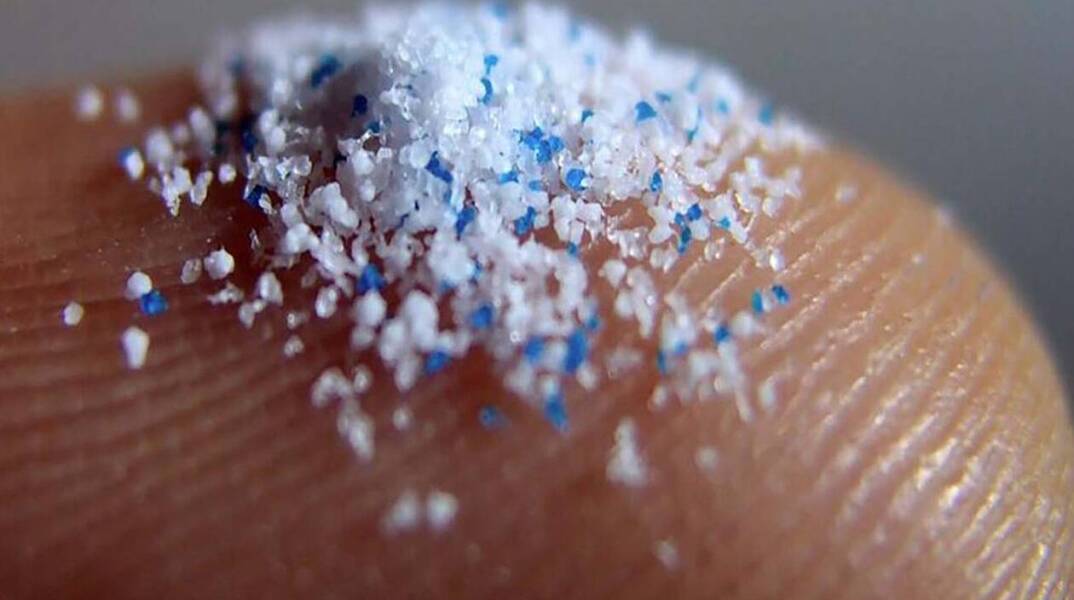
What are microplastics?
Microplastics are plastic particles smaller than 5 millimeters, have now been detected in every ecosystem on the planet, from the oceans to even the most remote mountainous regions. Their peculiarity lies not only in their small size, but in their ability to be easily transported through air and water, to enter food chains, and to affect organisms that have never come into “direct” contact with plastics. Studies from recent years have shown that microplastics accumulate in animal tissues, affect the reproduction of species, and disrupt critical ecosystem functions.
What is the impact of microplastics on humans?
And yet, all these microscopic pieces of plastic ultimately find their way... into our bodies, the bodies of the dominant species in the food chain. According to recent research from the University of New Mexico (UNM HSC Newsroom, 2025), analyses of human brains showed that microplastic concentrations in 2024 were approximately 50% higher compared to samples from 2016. Researchers also found that the brain accumulates more microplastics than other organs such as the liver and kidneys. In this way, a significant portion of the plastics we discard eventually returns to us, in quantities that several publications liken to the size of a plastic spoon.
In 2020, a team of Italian researchers detected microplastics in human placentas for the first time, proving that these particles can cross one of the body’s strictest protective barriers (Ragusa et al., 2021). Their presence there means that exposure to microplastics may begin even before birth. Although the consequences are not yet fully understood, this finding suggests that they may affect fetal development from its earliest stages. Preliminary studies even indicate that they can cause genetic damage, which theoretically could lead to mutations—though no definitive conclusions have yet been reached.
As I begin to dive deeper and deeper into the world of biology, I realize that our generation of scientists will need to confront problems that did not even exist a few years ago. Research on microplastics is not merely a scientific interest; it is an effort to understand how we can protect the health of humans, animals, and ecosystems. And this is one of the reasons I want to pursue biology: to contribute to a cleaner, safer, and more responsible relationship with the environment that sustains us.
The Earth needed hundreds of millions of years and a series of almost unbelievably ideal conditions to become the home of every form of life...and our own. The least we can do is respect it. And if there is one thing I want to remain from this text, it is this: the next time you are holding a piece of trash in your hand, before you drop it, think about how easily it can become another tiny piece of plastic in nature or even inside our own bodies. Sometimes, change begins with choices that seem insignificant: with a person who decided to pick up trash from a trail; with a student who wants to become a biologist; with a generation that does not want to leave behind a world filled with plastic. If we manage to see nature not as something given, but as something that inspires us and needs us, then we can still change the course of history. πλαστικό. Αν καταφέρουμε να δούμε τη φύση όχι ως δεδομένη, αλλά ως κάτι που μας εμπνέει και μας χρειάζεται, τότε μπορούμε ακόμη να αλλάξουμε την πορεία της ιστορίας.
Nature does not take revenge; it tests us.
Bibliography:
Ragusa, A., Svelato, A., Santacroce, C., Catalano, P., Notarstefano, V., Carnevali, O., Papa, F., Rongioletti, M.C.A., Baiocco, F., Draghi, S., D’Amore, E., Rinaldo, D., Matta, M. and Giorgini, E. (2021). Plasticenta: First evidence of microplastics in human placenta. Environment International, [online] 146(106274), p.106274. doi:https://doi.org/10.1016/j.envint.2020.106274.
UNM HSC Newsroom. (2025). UNM Researchers Find Alarmingly High Levels of Microplastics in Human Brains – and Concentrations are Growing Over Time. [online] Available at: https://hscnews.unm.edu/news/hsc-newsroom-post-microplastics-human-brains?utm_source=chatgpt.com [Accessed 15 Dec. 2025].
Writer: Alexandros Chatzialexiou